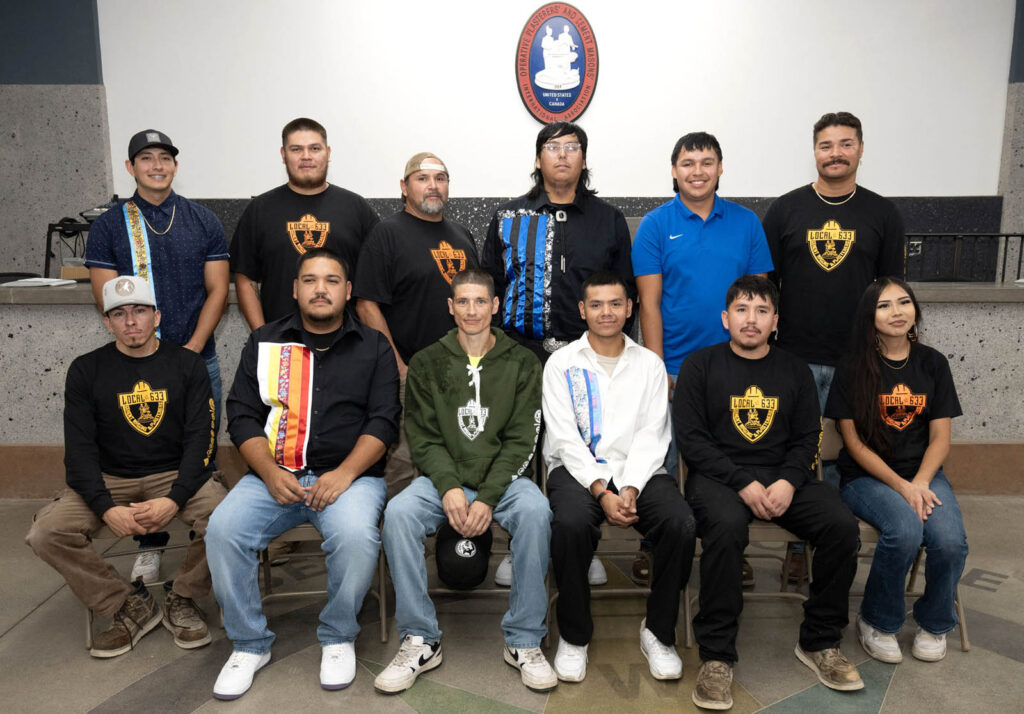
For the past two years, 20 year-old Charles Ikola has been commuting from his parent’s home in Deer River, MN, to wherever the work location is that needs his skills as a cement mason. Now in his third year as an apprentice, Ikola so impressed Local 633 apprenticeship coordinator Moke Eaglefeathers he was asked to help teach this summer’s Local 633 Cement Masons Industry Orientation Training Program, a ten week pre-apprenticeship program for young people from Minnesota’s Native American reservations.
Eaglefeathers recruits all the participants in the program. Growing up as a member of the Northern Cheyenne tribe in Montana, he is no stranger to life on the reservation. “I know how the ‘res’ works; I know how they are run,” Eaglefeathers admitted. “The tough part is to convince kids they don’t need to rely on the res. They can do it on their own.”
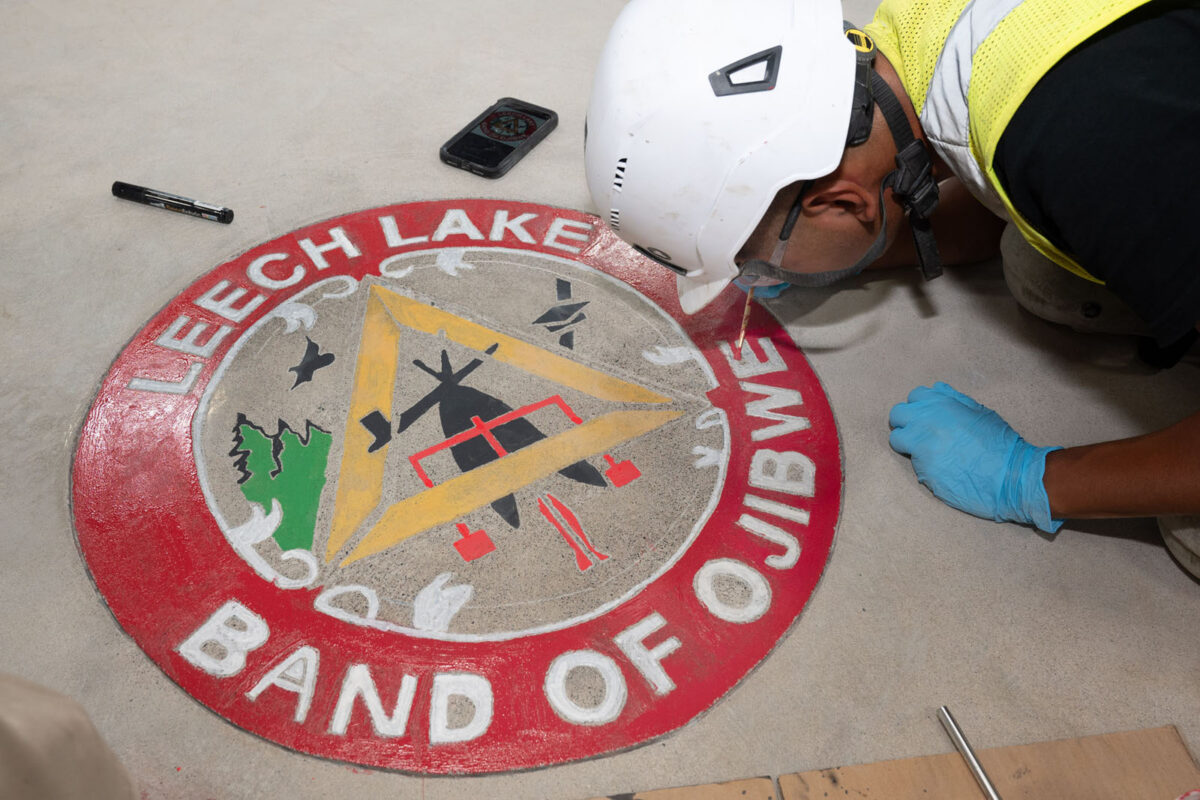
This year’s cohort that Eaglefeathers’ recruited features youngsters from six Minnesota tribes – Red Lake, Leech Lake, White Earth, Fon du Lac, Bois Forte and Mil Lacs – and one from Wisconsin, the Lac Courte Oreilles Band of Lake Superior Chippewa (Northern Wisconsin). MnDOT, the underwriter of the program, gave permission for Wisconsin to be included because of the agreement between the two states for the soon-to-be-started Blatnik Bridge construction projection in the Duluth-Superior region.
Before they start the program, all the participants must pass a physical examination to ensure they can handle the physical rigors of the job. Once they have medical clearance they are outfitted with all the tools a cement mason needs. Construction helmet, boots, edgers, darby – whatever tool the job will call for, they will already have the tools.
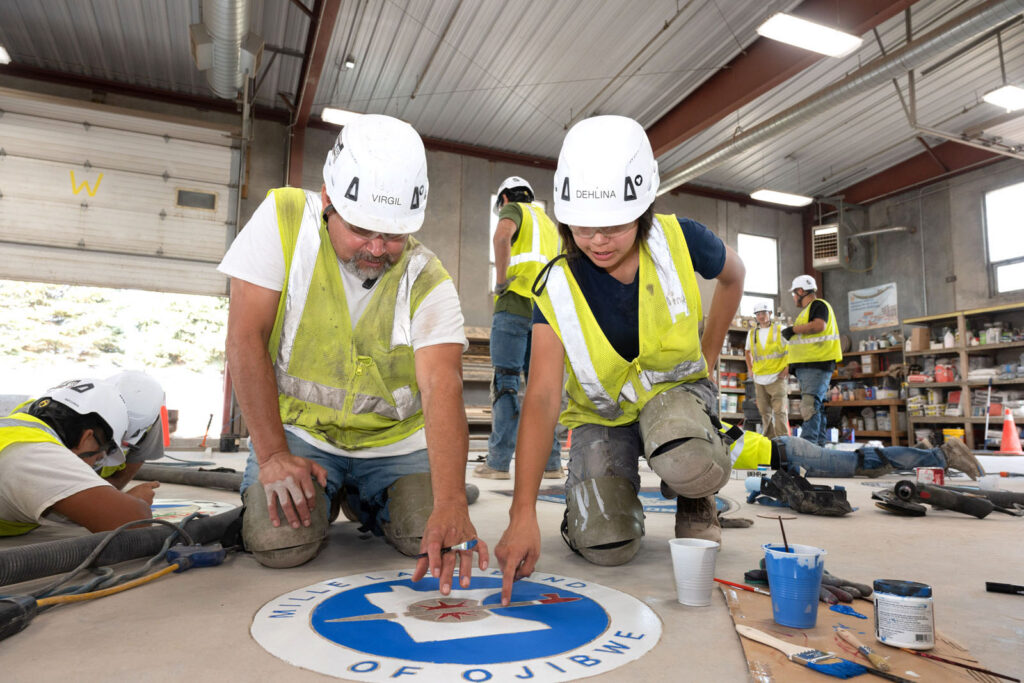
The program simulates a real-world job site. Participants start their day at 6:30 a.m. and it doesn’t end until 3:30 p.m. Eighty percent of the course is spent in the field, learning by actually pouring and edging concrete into something like curbs and gutters or sidewalks. Twenty percent is classroom learning where the students find out that math they learned in high school really does come in handy. “The way we teach the class is really like line dancing – two steps forward, one step backwards,” Eaglefeathers said. “We’ve never taught this course the same way year-to-year. It’s been tailor made every year based on the abilities of the class.”
Cement masonry is seasonal work here in this part of the U.S. Ikola has learned to stay busy as long as you can before winter sets in. But while his friends are toiling in college when the snow is on the ground, Ikola gets to indulge in one of his favorite activities. Says Ikola: “Me and my buddy go ice fishing on Red Lake a lot.”
###